Tool 1: Rumor Guard
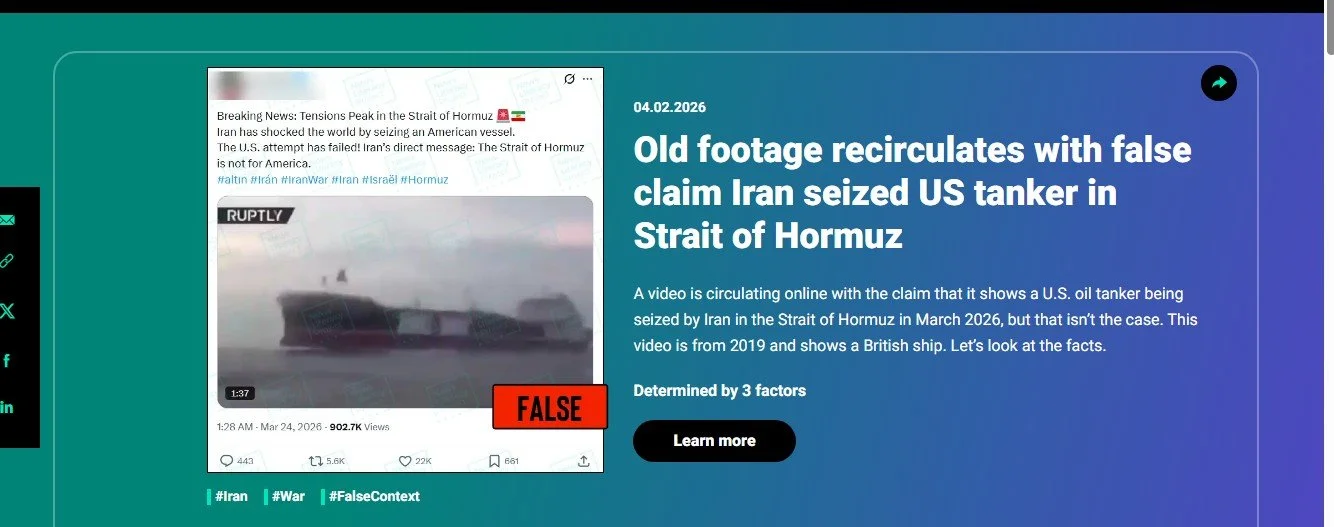
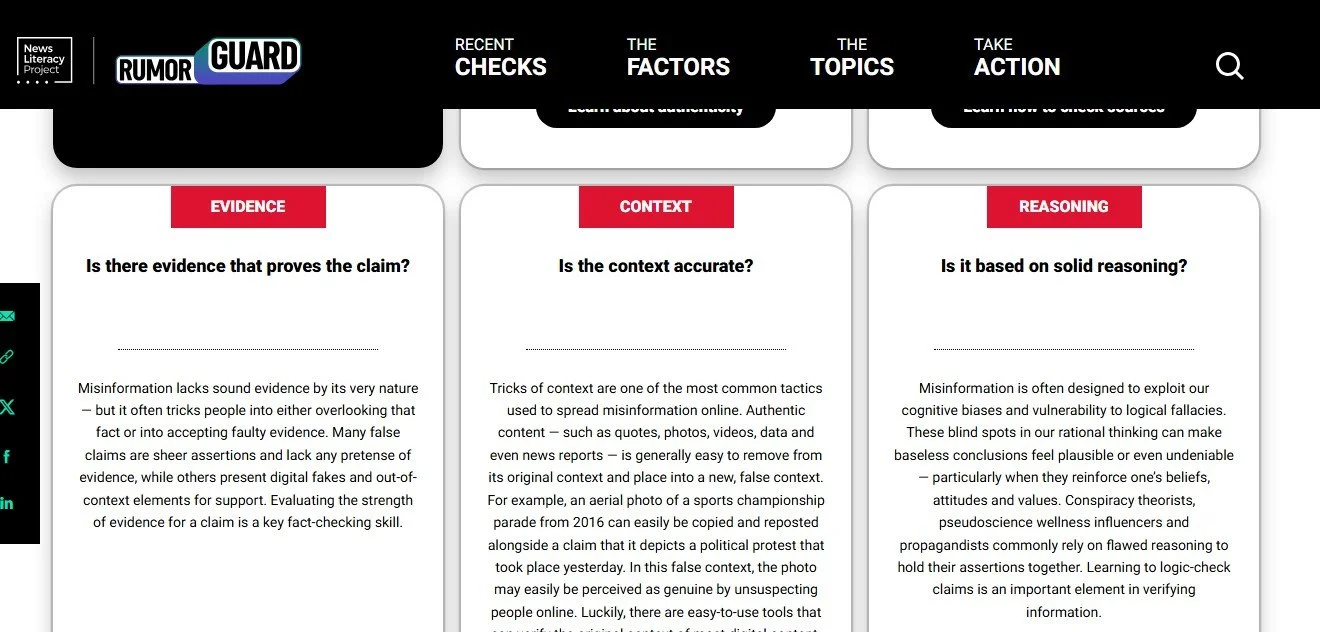
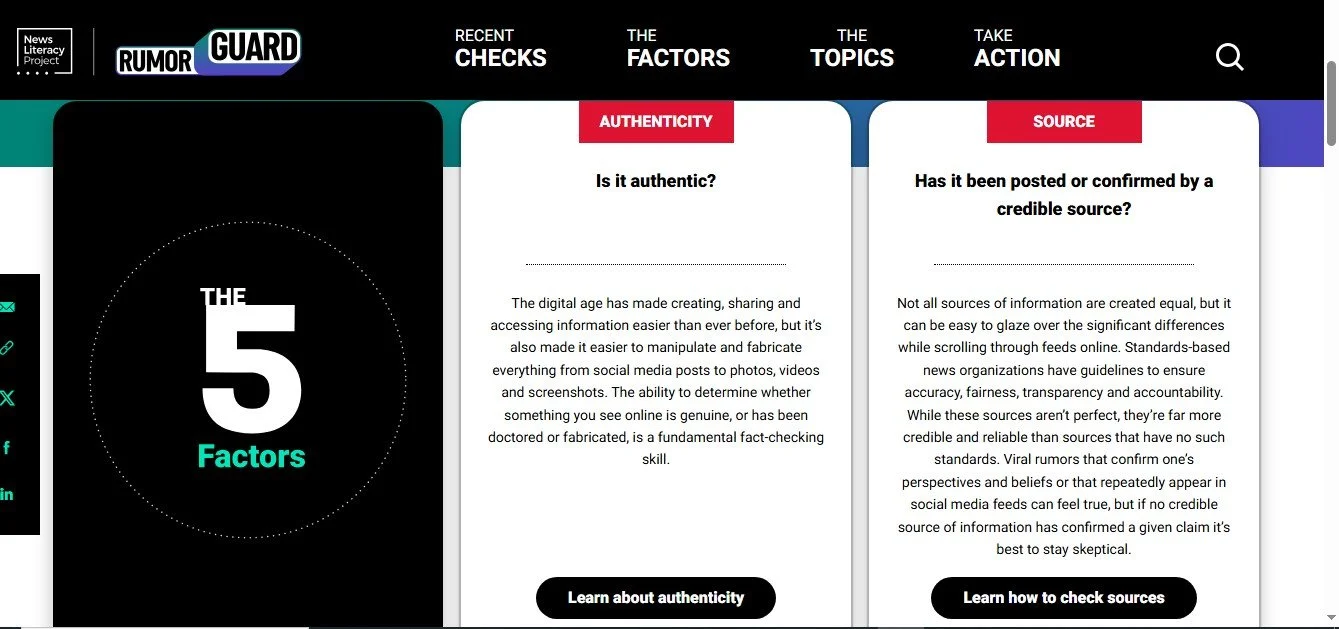
Rumor Guard is a website designed by the News Literacy Project that serves as a library of viral misinformation. It involves real-life trending rumors, and it uses a strict 5-factor evaluation to decide whether a claim is credible or not. The following five factors comprise a mental checklist of any news consumer: Source, Evidence, Context, Reasoning, and Authenticity.
I visited the site and saw how every rumor is dismantled. As an example, a recent check could reveal that a viral video of a supposed protest was actually an old video of a different country- failed Context and Source factors.
It is a great aid to building technical verification skills and is concerned with the evidence. It is efficient since it instructs in the practice of lateral reading, the habit of peeking outside a post to see what some other credible sources are saying. This tool is founded on the idea of Checkology by the News Literacy Project. It is not only to tell people what to think, but to demonstrate how to think. Users get to understand how to identify the standard tropes of misinformation by observing these five factors at work on actual confounding headlines. It transforms an unspecified Spidey-sense into a tangible, professional-level validation procedure.
Research Link: The News Literacy Project - Our Process and the 5 Factors
I believe Rumor Guard is the clinical aspect of news literacy. In case the vaccine is Bad News, the diagnostic kit is Rumor Guard. I discovered that I was using a particular checklist like Evidence, much less often, which resulted in me being less likely to be enamored by a confronting headline. The best method of keeping updated is by applying the skepticism acquired in the game to invoke a more formal investigation based on the five factors.
Tool 2: Bad News
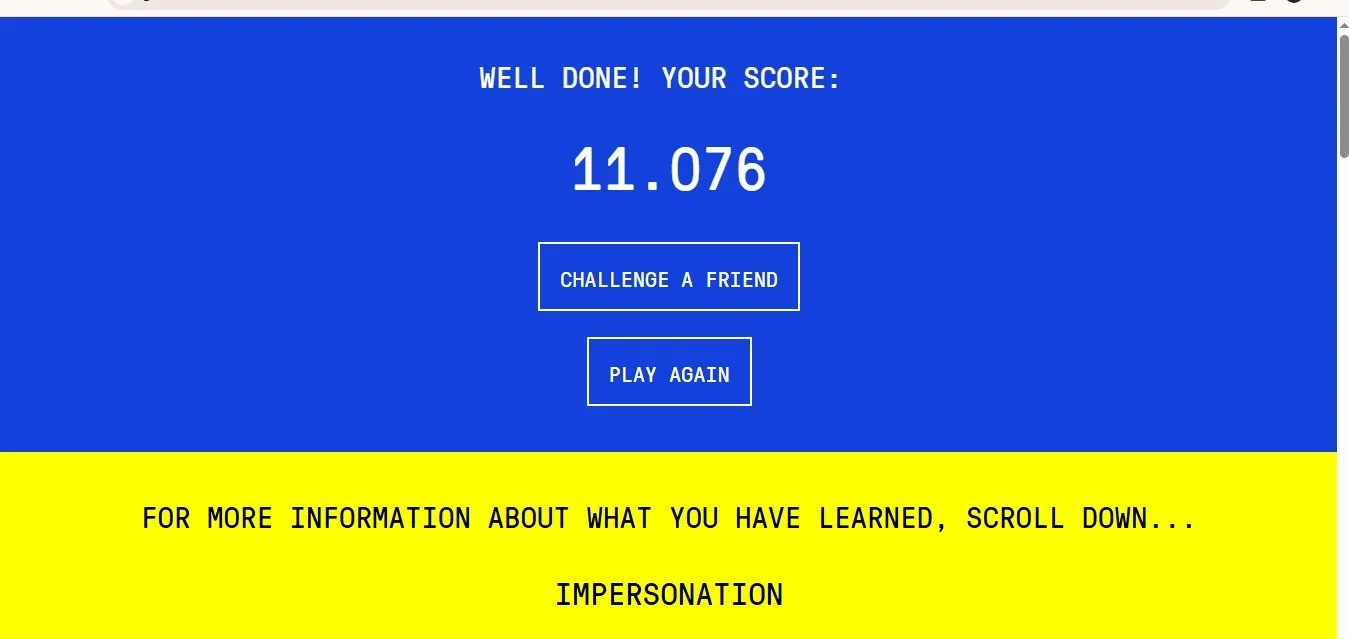
This is a digital literacy game, created by the University of Cambridge, that is interactive. This game employs the strategy of prebaking. I was an aspiring disinformation tycoon who had to achieve many followers without losing the sense of fake credibility.
The game simulates a social media feed. I was required to make tactical choices, including whether to generate a sensationalized or a neutral headline, to receive six distinct badges of misinformation: Impersonation, Emotion Polarization, Conspiracy, Discredit, and Trolling.
It was very effective, since it is not just a passive reading. By making me really come up with the misinformation, I learned the anatomy of a lie. The game is actually structured based on the Inoculation Theory, which states that when exposed to a diluted version of a threat, the body develops immunity to the actual one. This method is supported by research by Basol et al. (2020), which revealed that Bad News players were much more effective at identifying manipulation techniques than a control group. This cognitive immunity is sustainable as it trains the user against the kind of misinformation that they have not even encountered.
Research Link: https://www.getbadnews.com/en
I think interactive applications should become a part of digital literacy today. Conventional lectures tend to be unrelated to the social media reality, which moves at a very high pace, yet a game simulates the space where fake news is thriving. The gamification aspects offered real-time feedback on the operation of the manipulation. Although the possible disadvantage is that the users may eventually be too cynical about everything they read, the advantage of having mental antibodies against trolling and polarization is much greater than the risks. It will transform the user into an active and critical spectator of the algorithm rather than an innocent victim.